Wednesday, December 20, 2006

Anime Review: Basilisk: The Parting of Ways (Vol. 3)


As published on thenorthernlight.org

As the volume opens, the Iga have eight remaining ninja of the 10 from their clan who are listed on the scroll, while the Kouga only have five still alive. The scroll lists the top 10 ninja from each clan who are to battle until only one side remains. For the first two volumes, the Kouga were not even aware of this contest, as Iga Oboro and Kouga Gennosuke were about to get married. Once the Iga finally learn Gennosuke’s special power, they fear the only way they can beat him is through Oboro’s ability, which is the involuntary ability to cancel the power of anyone whom she makes eye contact with. Naturally, the would-be-lovers must part, even as they both hope for a peaceful solution, for them being together would be fatal.
“Basilisk” continues to be an emotional and suspenseful mature drama that just happens to be set with super-powered ninja. The show has no villains, per se, as each side in the ongoing clan struggle is in one moment sympathetic, and in the next, morally reprehensible. The show hasn’t taken a side, but shows the pointless conflict as destructive and futile.
The pace slows down in this volume, with the second episode offering a recap of the show so far with a little new information thrown in. The slightly slower pace allows more exploration into the consequences of the battles so far, especially now that Oboro and Gennosuke are trapped in the tragic feud as well. The voice acting is well done and the music adds to each scenes mood without being overwhelming. At the third volume, “Basilisk” shows no decline in the quality of its story or production. While any story about super ninjas can be overly melodramatic at times, “Basilisk” keeps the viewers engaged in the story and characters.
It’s always a good sign when the end of a volume leaves you anticipating the next one.

“Basilisk, Vol. 3 – The Parting of Ways”
4 stars (out of 5)
U.S. release: FUNimation
Animation: Gonzo
Genres: Romance, historical, action, drama
Release date: Nov. 14, 2006

Anime Review: Naruto - uncut box set 2


As published on thenorthernlight.org

Despite the uncut label, these box sets of “Naruto” are not scandalously different from the individual releases of the show. They do have a few differences – the original amount of blood shown during fights is restored and they include the Japanese language track – but the story is still that of hyperactive young Naruto and his fellow ninjas-in-training. No matter which language you chose to listen to, Naruto is still an annoying brat of a character, as he’s supposed to be. But the show finally starts to show a bit more depth as this set finishes up the conflict with Zabuza in the Land of Waves, revealing a more serious side with some of the recurring emotional themes of the show. Granted, it’s still for the younger set, but not too young, and there’s nothing childish about it. The second half of episodes in the box set starts the overriding Chunin Exam story arc, which will last another three or so volumes, these episodes merely laying most of the groundwork.
The slow pacing of the show makes box sets an ideal way to watch it; watching a two-hour continuous battle is preferable to watching it play out over six weeks on TV. On the other hand, the show uses a lot of flashbacks, so watching it in a marathon usually means sitting through a bunch of flashbacks that just happened.
“Naruto” may look like a simplistic fighting anime, and to some degree it is, albeit a rather fun one. But – especially once the other rookie ninjas get their stories fleshed out – it’s got a lot more to it than good vs. evil. It takes a lot of patience to watch this show, but by episode 19 (contained in this set) it will be apparent whether or not it’s worth it. That was the turning point for me back when it aired, and I’ll be picking up the next uncut volume for sure.

“Naruto,” uncut box set 2
4 stars (out of 5)
U.S. release: Viz Video
Genres: Adventure, comedy, shonen
Release date: Dec. 5, 2006

Video Game Review: Naruto: Uzumaki Chronicles


As published on thenorthernlight.org

Unlike most “Naruto” video games, “Naruto: Uzumaki Chronicles” plays more like an RPG than a fighting game. Instead of picking characters from the show to battle, players are put in the titular role of Naruto, and must perform certain missions and beat nameless enemies in random battles to gain Virtue Points. These points can then be used to purchase new items or upgrades of Naruto’s abilities, which are laid out on a variety of Skill Boards with limited room and different shapes. Different abilities fit together in different ways and it’s like a jigsaw puzzle that determines what powers Naruto will have. It’s an interesting system that forces players to choose how they want Naruto to grow, instead of a set skill path or simply being able to upgrade everything.
Sadly, the battles are lacking.
The generic enemies are too easy to beat, and the difficulty ramps up sharply when asked to fight tougher characters from the show. Even worse, the battles and missions take place on a map that Naruto travels around on – but only one location on the map is a save point. This means that if a player gets defeated anytime during a mission, even a multi-stage one, all progress up to that point is lost and the player will have to start all over again. This is especially frustrating when the cut scenes are not skipable, so defeated players will have to watch them again and again until they succeed.
There are good things about the game; the upgrade system is good, special moves are easy to pull off, mini games offer a change of pace and rewards, and guest characters can be used to tag-team when in a bind. For a single player, “Naruto: Uzumaki Chronicles” offers much more depth than a standard fighting game, but a lot of little hiccups keep it from being what it could’ve been.

“Naruto: Uzumaki Chronicles”
3 stars (out of 5)
U.S. release: Namco/Bandai
For PlayStation 2
Genres: Action, fighting, adventure
Release date: Nov. 15, 2006

Tuesday, November 28, 2006

Long waits, scalpers mark game console launches

As printed in The Northern Light newspaper
Nov. 28, 2006

The day before the PlayStation 3 was released, I bought two games, “Resistance: Fall of Man” and “Ridge Racer 7,” which are supposed to show off the new console’s graphics capabilities fairly well. Unfortunately, like most gamers, I wasn’t actually able to get a PS3 to play them on. Delays in production made the gaming console in very short supply on its launch date, though Sony announced plans to have at least a million units out by the end of the year.

So while Sony has finally entered the next generation of gaming, and the Nintendo Wii starts its own side generation, most of us will have to wait a while longer to play in it.

But it wasn’t for lack of trying. Those first few days were ruthless.

Thursday, Nov. 16

With very few places taking preorders, most people had to wait until today to start making plans. In other states, folks were already lining up outside of stores, but Anchorage retailers weren’t allowing campouts. A reconnaissance of stores in town revealed a few different strategies when it came to the PS3 launch.

Best Buy was getting a minimum of 26 units, and said a line could start at midnight for the tickets they would give out in the morning. CompUSA took PS3 preorders only with the purchase of a big-screen TV and had none left. Fred Meyer stores got six or eight units and lottery tickets would be given out to anyone in line tomorrow at 6:45 a.m.

Both Wal-Mart stores had six units and would begin selling them at midnight, but one was only going to announce the line’s location once it was 15 minutes to midnight and whoever made it to the line first would win. Sears had two units and would open as normal on Friday through a random door, which discouraged camping. GameStop took preorders a while back, which were snatched up as soon as they were offered, and Toys ‘R’ Us said it was sold out of preorders, but a rumor of unsold PS3s had people camped outside anyway.

My plan was to hit the Wal-Mart scramble, with a Best Buy campout and early morning Fred Meyer lottery as backup plans.

By 11:30 p.m., Wal-Mart was already a madhouse. Clusters of people were gathered at each aisle and intersection, hoping that when the secret line’s location was announced over the store intercom their group could get there first. Imagine a store packed full of people all wandering in tight circles in their little sections, ready to sprint to wherever the location may be, despite the cluster of people likely already to be there. To the store’s credit the announcement came over the speakers that they changed the format to a lottery. After lining everyone up single file, in a line that snaked in and out of the aisles of half the store, they started giving out tickets.

A group of people nearby was talking about their plans to sell the system on eBay if one of their numbers were drawn. An excited woman kept checking her Web-enabled cell phone to tell her friends the ridiculously high prices the PS3 was supposedly fetching on eBay. One man ahead in line said, “I need new friends,” after hearing what someone was supposedly willing to pay. Most of the people there were apparently wannabe scalpers, since selling the PS3 dominated most conversations.

It was a slap in the face to gamers everywhere to know that they might have had a shot at getting a new system if it wasn’t for the hoards of console-war profiteers who thought they could get thousands of dollars for a $600 machine, people who didn’t want it but would gladly take it just to drive up the price. Those are the type of people who shot a man outside a Wal-Mart in Connecticut and robbed a GameStop at gunpoint in San Francisco.

There were more than 400 people at this Wal-Mart but only six consoles. Needless to say, I didn’t get one.

Best Buy was next, but the crowd was dispersing by the time I got there. Apparently, nearly 1,000 people were waiting to line up and police were called in but had no way to organize the crowd, so Best Buy employees decided to give out the vouchers for their units right then instead of the next morning.

Friday, Nov. 17

While waiting in freezing temperatures outside Fred Meyer at 6:30 a.m., I look down the line and see a few faces from last night who are also enduring the cold for a last chance at a PS3. Here, as at Wal-Mart, most of the crowd wasn’t crazy about gaming, just money. After handing out tickets, everyone is ushered into the electronics department, where the drawing takes place and winners immediately buy their prize. When the first winner happily announced his intention to auction off his unit on eBay, the boos and hisses that came from some scattered members of the crowd showed that true gamers were indeed present.

It’s a small consolation, but after going through more than 100 pages of PS3 auctions on eBay that night, there were only a handful of legitimate bids. Most of the scalpers in those pages set the starting bid at $3,000-$5,000, but the bids that came in were obviously not real; bids would jump suddenly by thousands – and occasionally millions – of dollars, but only on auctions without a set buy-it-now price, and some winning bidders had no history of feedback. Going to various gaming forums, many upset gamers openly admitted to placing many false bids, despite the impact it might have on their eBay rating.

One poster said, “I will bet on every single PS3 auction, say ... $3,000.”

A particular auction’s bid history had a bidder who kept making high bids and then retracting it within an hour, saying it was a mistaken amount, only to repeat it and retract it continually over the course of the day.

Real auctions were taking place once the price got to $1,200 or lower, and by Monday that was around page 50. If the few hundreds of dollars is worth all the hassle, the opportunists will probably strike again, but more than half of the PS3s up for bid were only about $50-$100 over retail. If the scalpers were paying attention, they would have seen the exact same pattern after the launch of the system in Japan the week before. Non-gamers bought up available supplies and tried to inflate the market, only to have it come crashing back to earth within a couple of days.

But as I stood in line hearing others’ numbers come up, I resigned myself to the fact that I would have to wait a little longer for Sony’s console. But maybe I could still get a Nintendo Wii.

Saturday, Nov. 18

With no reported supply shortages and less hype than the PS3, I thought getting Nintendo’s innovative new console wouldn’t be as difficult. Fred Meyer held a midnight opening, and when I arrived at 11:30 p.m. a line of about 200 people had already formed outside. It was 20 degrees and I wasn’t properly prepared for such a line. Most people weren’t, as many were jogging in place and huddling in groups for warmth. The air was much more excited than at the PS3 events, maybe because everyone knew they had a much better chance at getting one, or maybe because there were more real gamers. Jokes about the console’s name ran down the line (“Is this the line for the bathroom? I heard people say they had to take a Wii.”) and after a few of the more popular Wii jokes were told, someone exhaustedly said, “This is going to be a long year.” Employees on both sides of me were yelling back and forth, apparently not sure if it was first-come first-serve or lottery-style.

Despite the large number of people who sat in their cars and then cut into the middle of the line, it was a first-come event. In case there was a lottery, some people came in groups but only wanted one console. Yet, despite having 79 units available, the line was cut off about 20 people in front of me, leaving me without anything to show for my last three days of effort.

Well, at least I do have two next-generation games; I’ll just have to wait a while to review them.

Sunday, November 19, 2006

Couldn't get a Wii either

Fred Meyer had 79 units available on a first-come, first-served basis. I showed up at 11:30 thinking it wouldn't be as bad as it was for PS3. There were already 200 people in line. Some were family groups that only wanted one Wii, but they still ran out about 20 people ahead of me. This is just sad.

Friday, November 17, 2006

I hope PS3 scalpers get shafted

I waited at two different stores yesterday and this morning for a chance at a PS3, and of course didn't get one. I wouldn't have even minded so much except that nearly everyone who won a PS3 in the stores' raffles would proudly exclaim that they didn't even want it, they just wanted to jack up the price and sell it on eBay. This is capitalism at its worst. And all the reports about shootings and robberies at game stores and PS3 waiting lines will be characterized as "look at how insane hardcore gamers are" when the only people to do such things are after the big sell! No gamer would rob a GameStop of all its PS3s or rob a line of waiting gamers at gunpoint. The most responsible thing true gamers can do is not buy ANY PS3s for over retail. That's the only way to show the greedy opportunists that we're not going to let them ruin things for the rest of us.

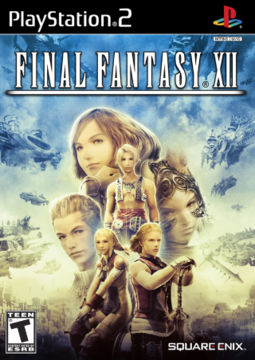
Video Game Review: Final Fantasy XII


As printed in The Northern Light newspaper
Nov. 14, 2006

After 12 volumes (not counting sequels, side stories or spinoffs), the Final Fantasy series continues to be the high standard that all RPGs aspire to. “Final Fantasy XII,” like all the central Final Fantasy games, is a stand-alone story unrelated to all the rest. Common story themes, game mechanics, general names and creatures tie them together somewhat, but what really makes a Final Fantasy game is its epic story. The small kingdom of Dalmasca, caught between two large warring kingdoms, is soon overtaken by Archadia. Dalmasca’s king is seen being assassinated by its own captain of the knights and its princess is said to have killed herself. Two years later, players start as an idealistic young man named Vaan, who wants to restore Dalmasca’s dignity and get out from under the Archadian Empire, while also looking for the traitor who killed his brother at the same time as the king. The epic story expands from there.

“Final Fantasy XII” has one of the most straightforward and compelling stories since VI (III when it came out in America, not to be confused with the upcoming III for Nintendo DS), with fallen kingdoms and conquering empires being more relatable than the near-undecipherable world of VIII. Along with the more grounded plot, deep and complex characters with excellent voice acting make it an ensemble cast without an already-defined main character, also going back to the strengths of VI. Parties can contain up to three characters, who can be swapped at any time. So if a character dies in battle, another one can immediately fill the vacant slot. This provides a good incentive to develop and use all the characters, and keep them at similar levels.

Combat is no longer random battles, but a refined MMO-style that’s completely customizable based on personal preference – it can be turn based or active time, with direct control of the whole party or the use of gambits. Gambits are the most interesting new feature in XII, allowing for characters to have individualized responses to a variety of specific situations, meaning players can custom-program the artificial intelligence of their party members. Playing with gambits is also very MMO-like, as the other party members will act on their own alongside the player’s character. But, unlike massively multiplayer online games, players can regain direct control of a party member at any time, for those times when a complex strategy is needed. Battles are fast and smooth, and random battles are not missed at all.

What doesn’t work as well is the new license board used to improve characters’ skills.

Some of the Final Fantasy games use a job-class system (which is always excellent), but others use more confusing systems like the materia, junction system or sphere grid systems. The license board allows any character to potentially use any skill as long as they hold the correct license and that ability has been purchased. Besides essentially adding an extra step to gaining abilities, the board layout requires some abilities to be purchased before others, but many times the skills are unrelated to the skill that character is trying to learn and license points are just wasted. If enough license points are acquired throughout the game, every ability could be open to every character. While it’s good to give players a lot of freedom in what types of skills their characters devolop, it ends up taking away from the characters’ individuality during battles by making their skills generically interchangeable. Of course, that wouldn’t even be a concern in any other RPG, but “Final Fantasy XII” gives its characters so much personallity during the story aspect that it’s a shame to see that lost during battles.

It’s a minor gripe, though, in a masterpiece of a game.


“Final Fantasy XII” ★ ★ ★ ★ ★
Square Enix
For PlayStation 2
Release date: Oct. 31, 2006
Genres: RPG

Anime Review: Full Metal Panic! The Second Raid: Vol. 1


As printed in The Northern Light newspaper
Nov. 14, 2006

One of the more accessible and successful anime series in the U.S., “Full Metal Panic!” has an excellent blend of action, comedy and drama. “Full Metal Panic! The Second Raid” is a 13-episode follow up to the original “Full Metal Panic!”, a 26-episode series combining military robot action with the comedic attempts of Sousuke Sagara as he tries to blend in with high school life. His undercover mission is to protect Kaname Chidori, an often-hostile girl who has special subconscious knowledge of “Black Technology,” which is sought after by the terrorist organization Amalgam. Sousuke, who grew up as a mercenary and now works for the secret paramilitary agency Mithril, is combat trained but socially clueless. Most of the humor comes from the deadpan military attitude with which he approaches every situation, Kaname’s exasperation at his tactics and her love/hate relationship with him.

“Full Metal Panic!” was followed up by “Full Metal Panic? Fumoffu,” a purely comedic series that stepped away from the main storyline. “Full Metal Panic! The Second Raid” comes back to the main story and adds the action and drama from the first series back in, making it a true sequel.

Volume one reintroduces the characters along with the new mysterious madman Gates and his twin assassins Xia Lu Lan and Xia Lu Fan. Even without watching the first shows, the story is easy to get into. “The Second Raid” has a slightly darker tone than the original, the scenes with the assassins in particular. The first volume sets up a lot of the new conflicts and serves as a good intro to the continuing story. The animation is very high quality and the action is fluid and gorgeous. The DVD is also loaded with special features, a rarity for anime, including audio commentary for all episodes.

“Full Metal Panic! The Second Raid” is about as mainstream as anime gets.Fortunately, it’s also really good.

"Full Metal Panic! The Second Raid: Vol. 1" ★ ★ ★ ★½
U.S. Release: FUNimation/ADV Films
Animation: Kyoto Animation
Release date: Nov. 14, 2006
Genres: Action, comedy, drama, mecha, romance

Anime Review: Noein - to your other self: Vol. 1


As printed in The Northern Light newspaper
Oct. 31, 2006

"Noein” is an interesting mixture of adolescent comedy/drama with surreal sci-fi action and mystery. Haruka is a girl just going about her everyday life, enjoying a final summer break with her friends before one of them, Yuu Karasu, leaves for a prestigious Tokyo middle school. Yuu’s mother, however, won’t let Yuu spend time with his friends but wants him to study hard to ensure his school admission. In the background of this normal drama, a group of strange travelers in cloaks literally appear out of nowhere with glowing cords attached to their backs – leading back to another dimension – looking for the Dragon Torque. Haruka soon encounters two of these hunters, who fight over her using incredible powers, claiming she is the Dragon Torque. When Yuu tries to come to Haruka’s rescue, one of the figures reveals that he is the Yuu Karasu of his dimension, corresponding to this dimension’s future.

The sci-fi multi-dimensional plot of the show is revealed slowly, so the viewer might be lost trying to understand everything that’s going on at first. In the five episodes on volume one, the story nicely balances the sci-fi elements with the normalcy of Haruka and her friends. The contrast between the two worlds helps viewers feel how jarring things are for Haruka when strange things start to happen to her.

The art is fairly simple but fluid, even having a sketch-like quality during certain times of intensity that serves the action well. Computer effects are used heavily but are integrated expertly into the animation and again draw a nice contrast between the normal and sci-fi aspects.

With its juxtaposition of styles and intriguing story, “Noein” is far from a standard action or sci-fi series. It’s a welcome treat to those looking for something different.

"Noein - to your other self: Vol. 1" ★ ★ ★ ★
U.S. Release: Manga Entertainment
Release date: Oct. 17, 2006
Genres: Drama, sci-fi

Video games, virtual reality are newest options for business, education

As printed in The Northern Light newspaper
Oct. 31, 2006

Even though the mainstream press and politicians act as if video games like “Grand Theft Auto” and “Bully” are indicative of the entire medium, some forward thinkers are starting to think of video games in fascinating new ways.

Technically, the massively multiplayer online Second Life is not a game, per se, as there are no goals, points or quests to complete. Similar to the popular game “The Sims,” Second Life is more about the everyday business of life. The difference is that the business in Second Life is real, with millions of real dollars traded every week. The news agency Reuters even recently opened up a virtual news bureau inside of the game world, with a staff member paid to log onto the game at set times and keep virtual office hours. From virtual business meetings in custom-built virtual meeting rooms (with real-life video conferencers interacting with virtual avatars) to a virtual clothing store that allows avatars (with real-life measurements) to try on and buy actual outfits, Second Life is poised to become the virtual reality that was imagined when the term was first coined.

Wal-Mart, American Express and Intel are looking into using Second Life for corporate training, according to a September 2006 “Popular Science” article. A basic Second Life account is free, and players don’t have to be businessmen – flying, teleportation and nearly anything one can imagine or create is possible in this virtual playground. The site’s creator even hopes that the social aspects of his online community will be like a living MySpace.

On the education front, a year-long study by the Federation of American Scientists concluded that the addictive nature of video games could be used to create new video game learning tools for schools, according to an Oct. 17 Associated Press article. The group called for federal research into the potential of video game learning.

While educational games don’t usually sell well, “Brain Age” for Nintendo DS has been a huge seller – and it’s basically just math and reading mini-games. And if role-playing gamers can memorize all the monster and item names, strengths, and stats, just think if a game used real chemistry and science. Gamers would learn without even realizing it.

Aircraft pilot trainers and even the Army have been using games for years to teach skills that directly apply to real-world applications. Perhaps very soon, playing hours of video games won’t be a sign of a slacker but of an overachiever. Of course, if it really is that easy to learn from games, those disturbed over “Grand Theft Auto” might have a legitimate concern. Then again, school-sanctioned sports have been teaching violent and competitive activities to students for years, so maybe a college “Halo 3” team isn’t beyond possibility. Thanks to Second Life, neither is a virtual classroom.
 
free web tracker